
Mount Makaturing Coffee Producers Trading Association (MMCPT), Butig, Lanao del Sur
From Coffee Capital to Conflict Zone
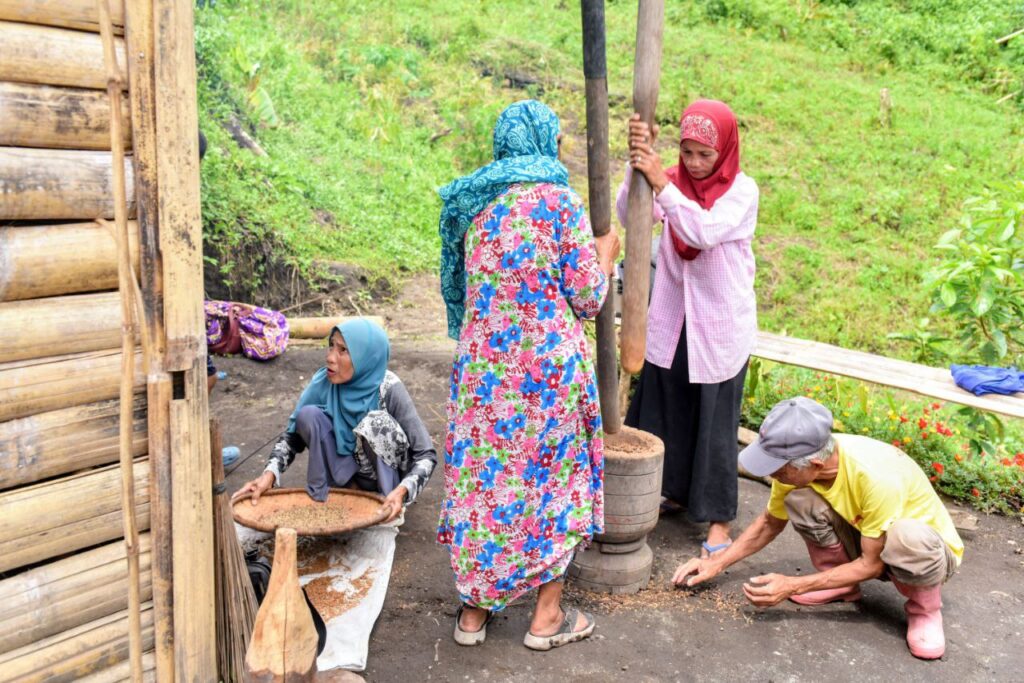
In the 1970s, Butig was known as the coffee-growing capital of Lanao del Sur. Coffee trees thrived naturally on the slopes of Mt. Makaturing, shaded by forest and nurtured by cool air at a minimum of 800 meters above sea level. Farmers harvested by truckloads and, despite the rough half-day trip over winding roads, delivered their coffee to Nestlé’s buying station in Cagayan de Oro.
But decades of conflict unraveled this prosperity. The “all-out war” of 2000 against the Moro Islamic Liberation Front (MILF), which had made Butig their second largest base in Mindanao, followed by the localized Maute siege in 2016 — predating the Marawi siege the following year — drove residents from their lands. Coffee was left untended and abandoned, while Nestlé’s declining prices pushed farmers toward rice after an irrigation project was completed in 2010. The old trees became fodder for civet cats, yielding wild kape alamid — a ghost of what was once a thriving industry.
Peace Crops Steps In
When Peace Crops entered Butig under the BKCF–GGGI project, the goal was clear: organize women into an enterprise and build peace through livelihood. Searching for growers, the team found women who still cared for scattered trees. To inspire them, Peace Crops organized an exposure trip in September 2023 to the women-led Bayanihan Millennium Multipurpose Cooperative (BMMPC) in Pangantucan, Bukidnon — a community of Manobo farmers who had also endured decades of armed conflict linked to the communist insurgency.
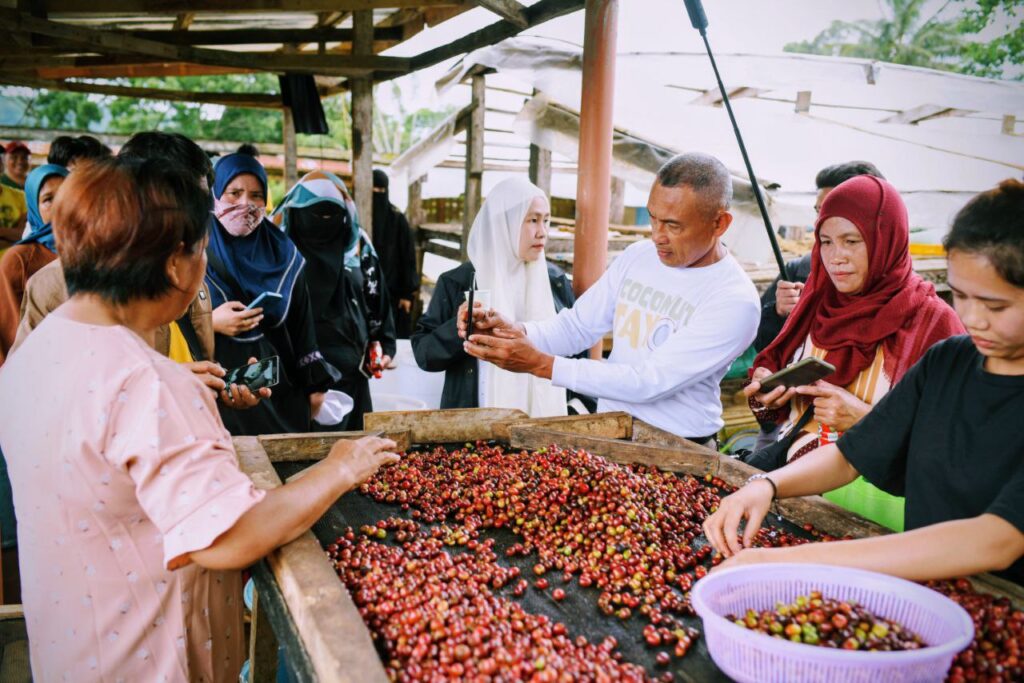
The resonance was immediate: women, coffee, conflict. For the women of Butig, the visit was proof that coffee could be reclaimed not only as a crop but also as a livelihood. Returning home, they formed the Mount Makaturing Coffee Producers Trading Association (MMCPT) — a women-led group dedicated to reviving Butig’s coffee heritage.
“We used to think our coffee had no value anymore,” recalls Omina Langco, one of the pioneers. “When we saw how other women organized and managed their coffee in Bukidnon, it gave us hope that we could do the same in Butig.”
From Organizing to Enterprise
MMCPT soon anchored itself within a broader structure. In April 2024, the Lama Butig Upland Coconut and Coffee Agriculture Cooperative was established with 65 members — 35 men and 30 women. MMCPT became its branch focused on coffee processing, demonstrating the value of organizing around a shared crop.
The results were immediate and tangible. In just its first year (spanning 2024–2025), MMCPT sold more than 1,000 kilos of coffee beans and ground coffee across the cities of Marawi, Iligan, Cotabato, Cebu, and Manila. While buyers did not disclose their exact purchase price, Peace Crops had previously bought a kilo at ₱350, which also reflects the prevailing market rate in Lanao del Sur. Using this as a reference, sales are estimated at around ₱350,000, showing that Butig’s coffee could once again compete in modern markets. With over 100 hectares of coffee in the Mt. Makaturing area, the potential for scale is clear.
Strengthening Quality and Stewardship
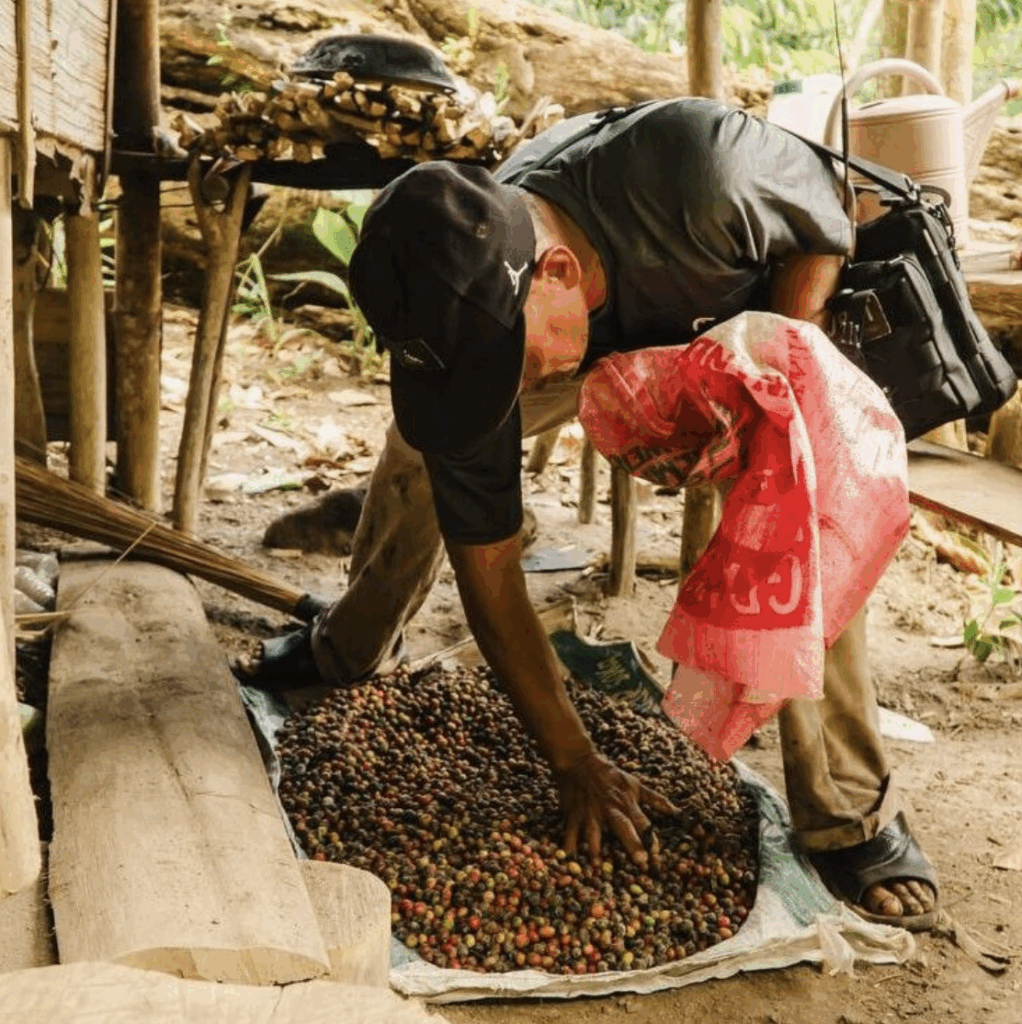
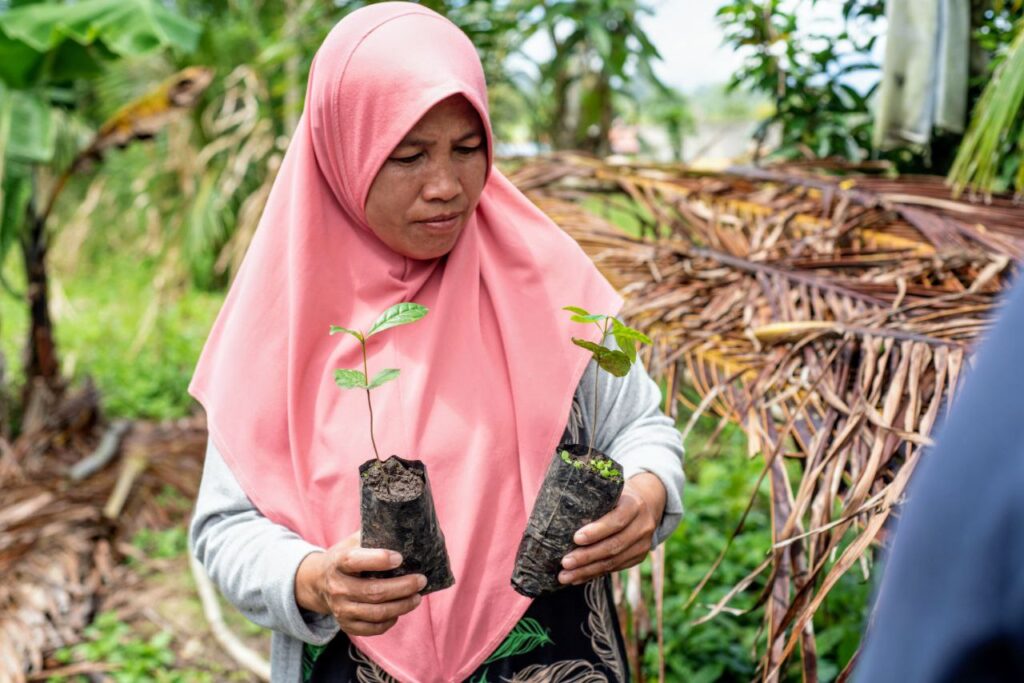
With Peace Crops’ constant guidance, MMCPT began adopting practices that prioritized quality. Farmers shifted to harvesting only red cherries, a simple but vital step learned in Bukidnon. A makeshift solar dryer was installed in their forested farm in Purok 5, giving them the means to process beans properly on-site. To complement their unusual high-altitude Robusta — rare at 800 to 1,400 meters — Peace Crops entrusted them with 750 Arabica seedlings, now chest-high. The decision was intentional: empower women as natural caretakers and position them to steward Butig’s first diversification into Arabica.
Recognition at the National Stage
After months of anticipation, a breakthrough came in August 2025 when Peace Crops facilitated a Zoom meeting between MMCPT and the Philippine Coffee Board Inc. (PCBI) — the national body overseeing the country’s Q-Grading competition.
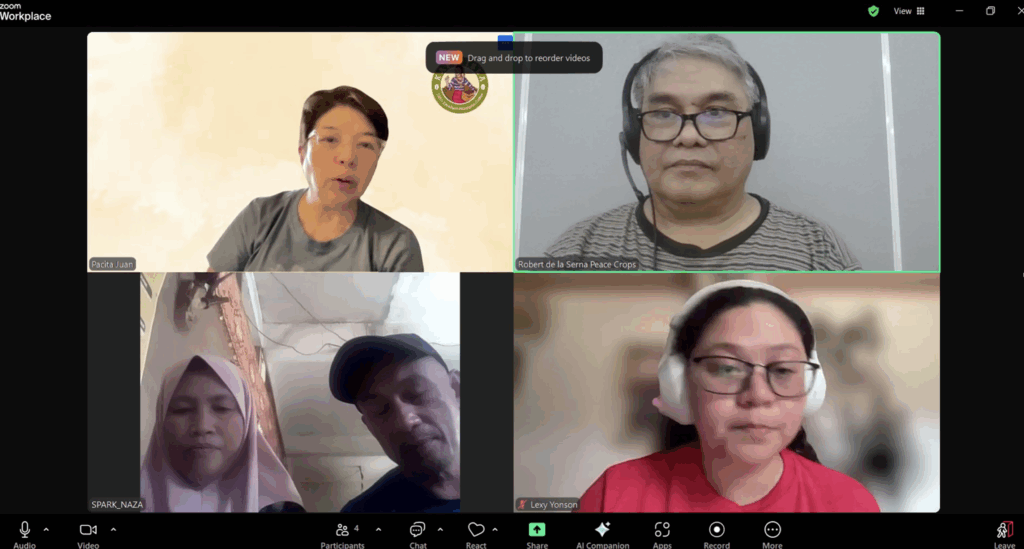
This was no ordinary conversation. PCBI not only expressed excitement at Butig’s long history, unusual high-altitude Robusta, and potential single-origin branding — they also committed to purchase the available 150 kilos of green beans from MMCPT. Moreover, PCBI signaled its intent to buy more once the main harvest season peaks in December.
“For us, it was unbelievable,” says Omina. “To speak directly with the Philippine Coffee Board — this is something we never imagined. We felt proud, not just for ourselves but for Butig.”
A Different Kind of Success
The story of MMCPT is not yet one of profit maximization, but of transformation:
- Women organized into an enterprise leading Butig’s coffee revival.
- 65 members under the Lama Butig Cooperative, with MMCPT focusing on coffee.
- ₱350,000 in early sales from 1,000 kilos of beans and ground coffee across five cities.
- 750 Arabica seedlings, entrusted exclusively to women and now chest-high.
- Solar dryer installed in Purok 5, supporting proper processing.
- First national market entry, with PCBI purchasing green beans and awaiting more in December.
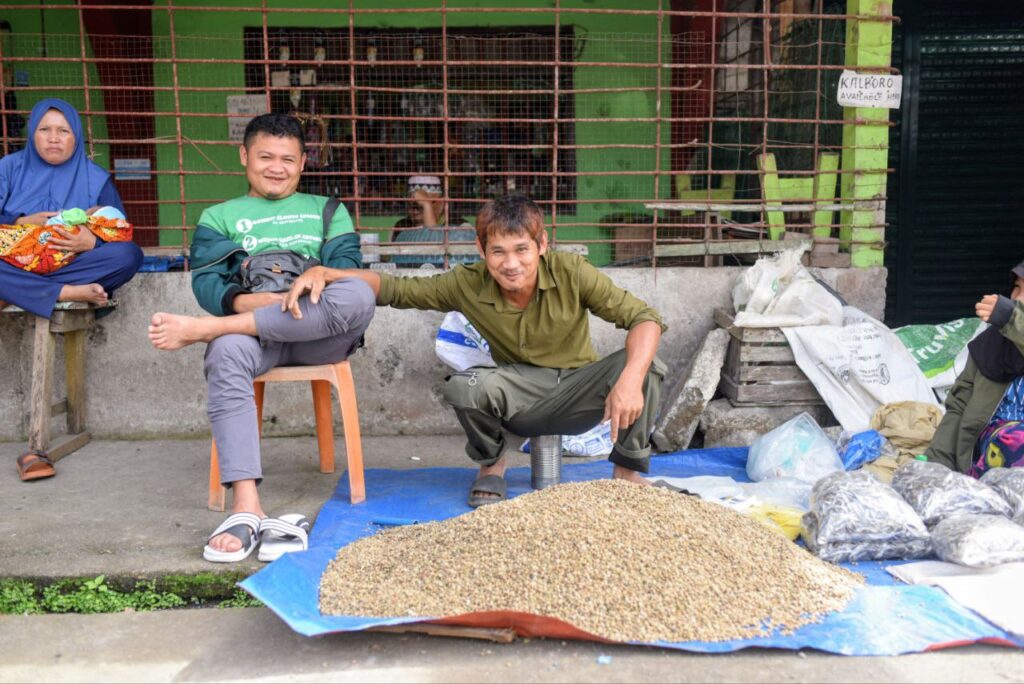
For Butig — once synonymous with conflict — this recognition marks a turning point. For MMCPT’s women, it is proof that they can lead in both farms and markets. And for Peace Crops, it affirms the project’s guiding objective: that livelihoods can be pathways to both peace and prosperity.
The resonance endures: women, coffee, conflict — reshaped into a story of peace.